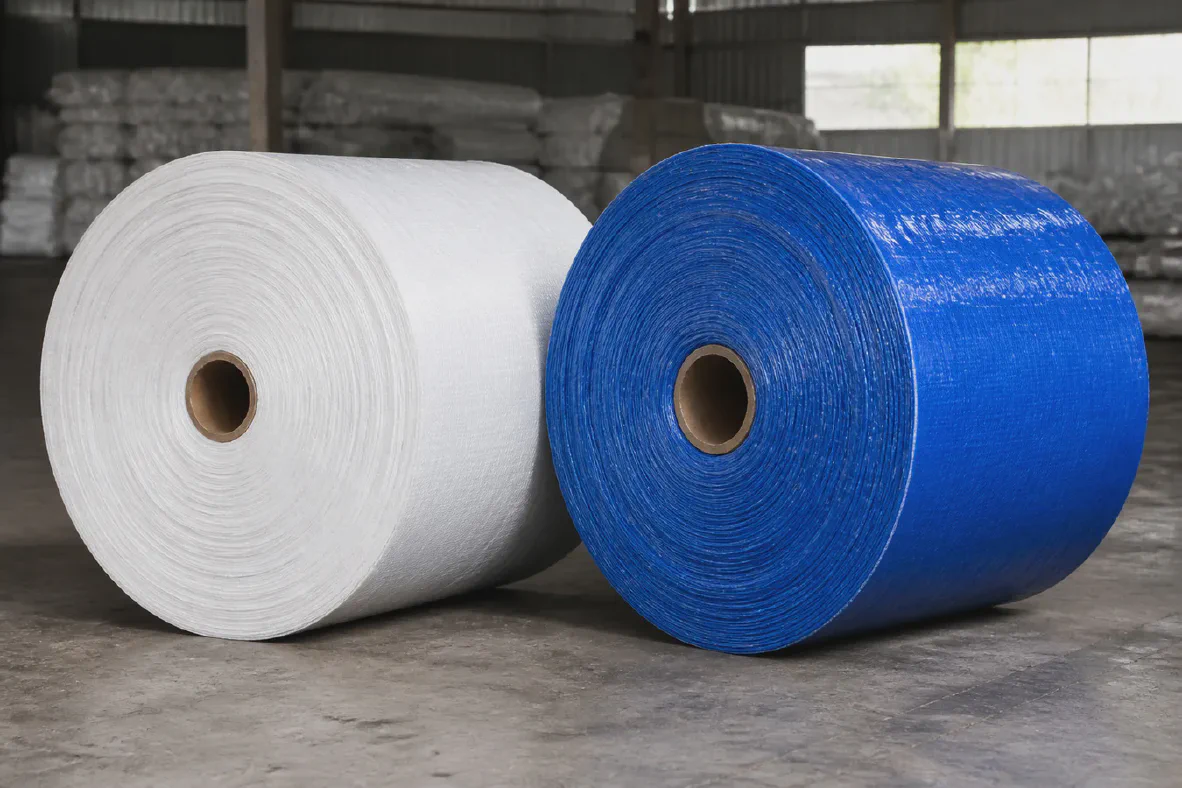
Buyers often use PP woven roll, PE woven roll, PE laminated fabric and tarpaulin roll as overlapping terms. In factory communication, the safest approach is to define the material structure, coating, lamination, roll width and final application instead of relying on one product name.
This comparison is written for bulk buyers, tarpaulin converters, packaging buyers and project purchasers who need a practical way to discuss woven roll specifications with suppliers.
Simple material structure comparison
| Term | What It Usually Means | Common Buyer Concern |
|---|---|---|
| PP woven roll | Polypropylene woven base fabric roll | Tensile strength, weave density, cost and roll stability |
| PE woven / PE laminated roll | Woven base with PE coating or lamination | Waterproofing, surface protection and conversion behavior |
| PE tarpaulin roll | Tarpaulin-style roll material with PE laminated surface | Cover manufacturing, welding, sewing and outdoor use |
| Tarpaulin base cloth | Base fabric before or for tarpaulin conversion | GSM, yarn, weave density and coating compatibility |
| PVC tarpaulin roll | PVC-coated tarpaulin material | Different material route, often used for heavier-duty covers |
Not every supplier uses the same terminology. A buyer should always confirm whether the quote refers to base cloth, laminated roll or finished tarpaulin material.
PP woven roll: strengths and limits
PP woven rolls are widely used because they offer stable weaving, good tensile strength and cost efficiency. They are suitable for packaging, ground cover, site covering and as base material for laminated products.
However, an uncoated PP woven roll is not automatically waterproof. If the final application requires rain protection or outdoor cover use, PE lamination or coating should be discussed.
PE laminated tarpaulin roll
PE laminated tarpaulin rolls are often selected for cover manufacturing because the laminated surface improves water resistance and surface protection. This material can be used for truck covers, construction site covers, storage covers and general outdoor covers.
For converters, the key points are:
- roll width and cutting yield;
- coating adhesion;
- welding or sewing behavior;
- color consistency;
- UV target;
- roll diameter and packing method.
See Tarpaulin Conversion Fabric Rolls for the core application page.
PE tarpaulin roll vs PVC tarpaulin roll
PVC tarpaulin roll can be used for heavy-duty tarpaulin applications, but it is a different material route from PP/PE woven roll material. Buyers should not compare them only by price or weight.
| Comparison Point | PE Laminated Woven Roll | PVC Tarpaulin Roll |
|---|---|---|
| Material structure | Woven base with PE lamination/coating | PVC-coated fabric or PVC tarpaulin material |
| Common use | General covers, construction covers, agriculture covers, packaging covers | Heavy-duty covers, industrial covers, higher-duty projects |
| Weight | Often lighter depending on GSM and coating | Often heavier depending on coating |
| Conversion | Cutting, sewing, welding depending on surface | Welding and fabrication depend on PVC system |
| Price comparison | Should compare by finished weight and duty level | Should compare by coating, base fabric and duty level |
| Best sourcing method | Define GSM, lamination, UV, width and application | Define PVC thickness, base fabric, coating and application |
If your project specifically requires PVC tarpaulin, the supplier and specification should be discussed separately. If your project needs economical PP/PE woven cover roll material, PE laminated woven rolls may be more suitable.
Application matching
| Application | Better Starting Point |
|---|---|
| Truck cover manufacturing | PE laminated tarpaulin roll or heavier-duty material |
| Construction site cover | Yellow, blue or grey PE laminated woven roll |
| Agriculture and outdoor storage | Green or black UV-treated woven roll options |
| Industrial packaging | White or clear PP/PE woven roll |
| Weed control / nursery ground cover | Black UV ground cover PP woven roll |
| Short-use temporary covers | Lower-to-medium GSM woven or laminated roll |
Common sourcing mistakes
Mistake 1: comparing only GSM
GSM does not show coating adhesion, tensile strength, UV package or roll diameter. Always compare base fabric and finished laminated weight separately.
Mistake 2: using “tarpaulin” without defining structure
One buyer may mean finished tarp, another may mean roll material. State whether you need roll material for cutting and conversion.
Mistake 3: ignoring roll width
Wrong roll width can create cutting waste, poor welding layout and inefficient packing.
Mistake 4: ignoring packing
Roll diameter, pallet method and container loading affect landed cost and warehouse handling.
Quote request checklist
When asking for a quote, include:
- final application;
- material structure required;
- GSM or finished weight;
- PE lamination or coating;
- color;
- UV target;
- roll width and roll length;
- printing requirement;
- packing method;
- destination port;
- expected order quantity.
FAQ
Is PP woven roll the same as tarpaulin roll?
No. PP woven roll can be a base material or packaging material. Tarpaulin roll usually means a cover-oriented roll, often with PE lamination or coating.
Is PE laminated woven roll waterproof?
PE lamination improves water resistance, but the final waterproof performance depends on coating, seams, conversion and finished product design.
Should I choose PE tarpaulin roll or PVC tarpaulin roll?
It depends on duty level, budget, weight, welding process and application. PE laminated woven roll is often used for economical and flexible cover manufacturing, while PVC tarpaulin may be selected for heavier-duty requirements.
What should converters confirm first?
Converters should confirm roll width, GSM, lamination, coating adhesion, color, UV target and cutting layout before sampling.
Related sourcing links
- Tarpaulin fabric rolls
- Blue heavy-duty tarpaulin roll for cover manufacturing.
- White PP/PE woven roll for packaging and liner conversion.
- How to choose GSM before comparing roll prices.
- Laminated vs unlaminated woven rolls when quotes mix base cloth and tarp film.
- PP/PE woven roll buyer’s guide for the full purchasing map.
- PE laminated vs PVC tarpaulin for Australian cover makers when local quotes use 680–900 GSM PVC.