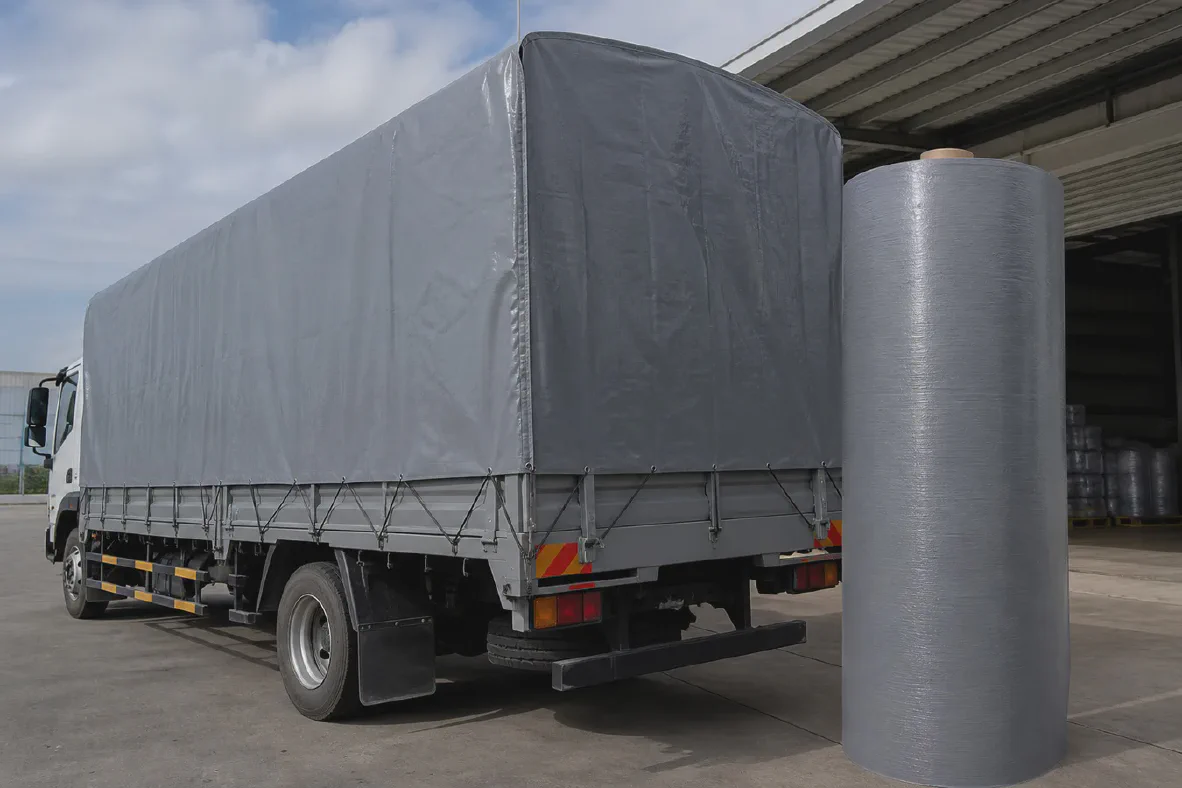
Truck cover buyers usually do not need a generic tarp material. They need roll material that can be converted into a finished cover with the right width, coating, color, UV target and packing plan.
This guide is for buyers sourcing truck cover tarpaulin fabric rolls before buyer-side cutting, sewing, welding, eyelet work and final cover fabrication. We supply roll material. The finished cover making process should be handled by the buyer, converter or local cover workshop.
What buyers should confirm first
The most important question is not only “what GSM is good?” A truck cover material must match the finished cover size and the conversion process.
| Buying point | Why it matters | What to send |
|---|---|---|
| Finished cover size | Controls roll width and cutting yield | Truck body size, cover length and overlap |
| Conversion method | Sewing and heat welding need different review | Sewing, welding, eyelet or reinforcement method |
| Roll width | Affects waste and panel layout | Target roll width or available machine width |
| GSM and coating | Controls strength, handling and surface protection | GSM range, one-side or two-side PE lamination |
| Outdoor exposure | Helps define UV target and color choice | Expected exposure months and market climate |
| Packing method | Affects container loading and unloading | Roll wrap, pallet or loose loading preference |
For width planning, also review roll width planning for tarpaulin conversion.
Common roll choices for truck covers
Blue is a common option for visible truck covers, road transport covers and general cargo rain protection. See the blue PE laminated tarpaulin roll page when the project needs a standard blue cover material.
Green is often selected for outdoor storage, field use and darker cover requirements. See the green PE laminated tarpaulin roll page when the final cover should blend with outdoor or yard environments.
Gray or silver gray is a neutral industrial option for machinery, equipment and heavier cargo protection. See the gray PE laminated tarpaulin roll page when the buyer wants an industrial appearance.
For a deeper color comparison, read the blue, green or gray tarpaulin roll color guide.
GSM and coating should match duty level
A light lorry rain cover and a heavy flatbed cargo cover should not be quoted with the same logic. Lower GSM may help cost and handling, but heavier-duty covers often need stronger woven base fabric, better coating adhesion and a more suitable UV package.
For truck cover projects, buyers should confirm:
- Whether the cover is for short-distance local transport or long outdoor exposure.
- Whether the cover will be folded frequently.
- Whether the buyer-side process uses sewing, welding or both.
- Whether the cover needs edge reinforcement, eyelets or rope fastening.
- Whether the roll will be packed loose, wrapped or palletized for export.
Do not skip packing discussion
Roll diameter, core size and packing method affect container loading. If the material is for continuous truck cover production, the buyer should check whether the roll can be handled by the workshop’s lifting and unwinding equipment.
For shipment preparation, review export packing methods for woven fabric rolls and use the container loading calculator before finalizing the loading plan.
Best next step
Before quotation, send GSM target, roll width, roll length, color, coating, UV requirement, quantity, destination port and a photo or sketch of the intended truck cover. If the project is not only truck cover but also machinery transport or port-yard cargo protection, compare the heavy-duty tarpaulin fabric rolls page as well.
For direct review, use the bulk inquiry page.